
Warm KitchenAid Refrigerator Stuck at 56°F in La Mesa: Main Control Board Replacement
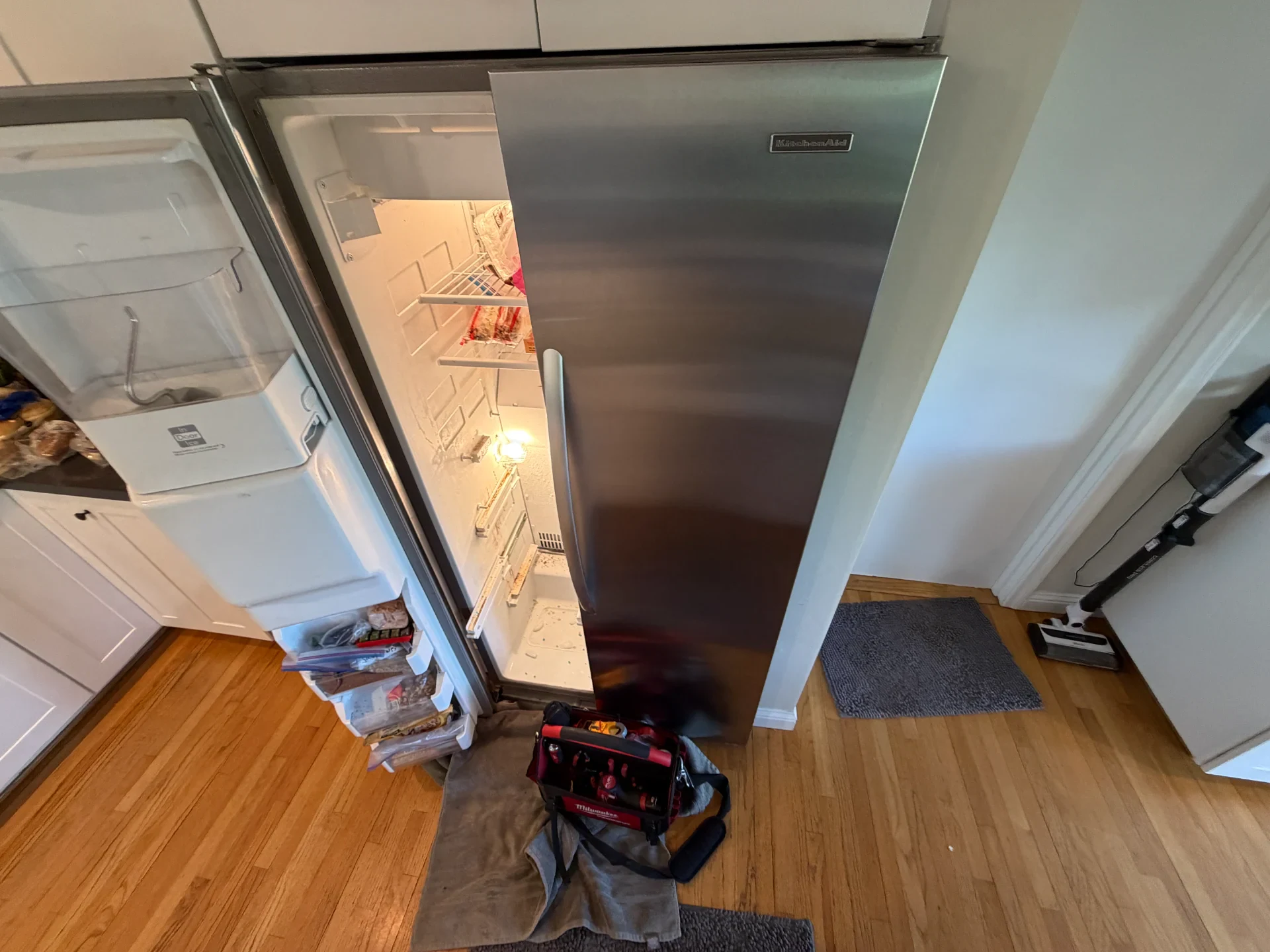
Got called out this afternoon to a hillside home near Mount Helix in La Mesa (91941) for a 42-inch built-in KitchenAid side-by-side refrigerator that stopped cooling the fresh food side. Fifty-six degrees. Spoiled milk. The homeowner noticed their drinks and produce felt lukewarm, so they put a thermometer on the middle glass shelf and watched it climb to 56°F, well above the safe 37°F food storage zone. Even stranger, the freezer side was still holding near zero, yet the machine was making a rapid clicking sound from the top grille and turning on and off every single second.
Diagnosing the Closed Air Damper and the 1-Second Power Cycling
I rolled my tool cart into the kitchen and listened to the upper machine compartment above the refrigerator doors. Click-clack. Click-clack. Every single second. The interior LED lights, the evaporator fan, and the compressor relay were pulsing on and off like a turn signal.
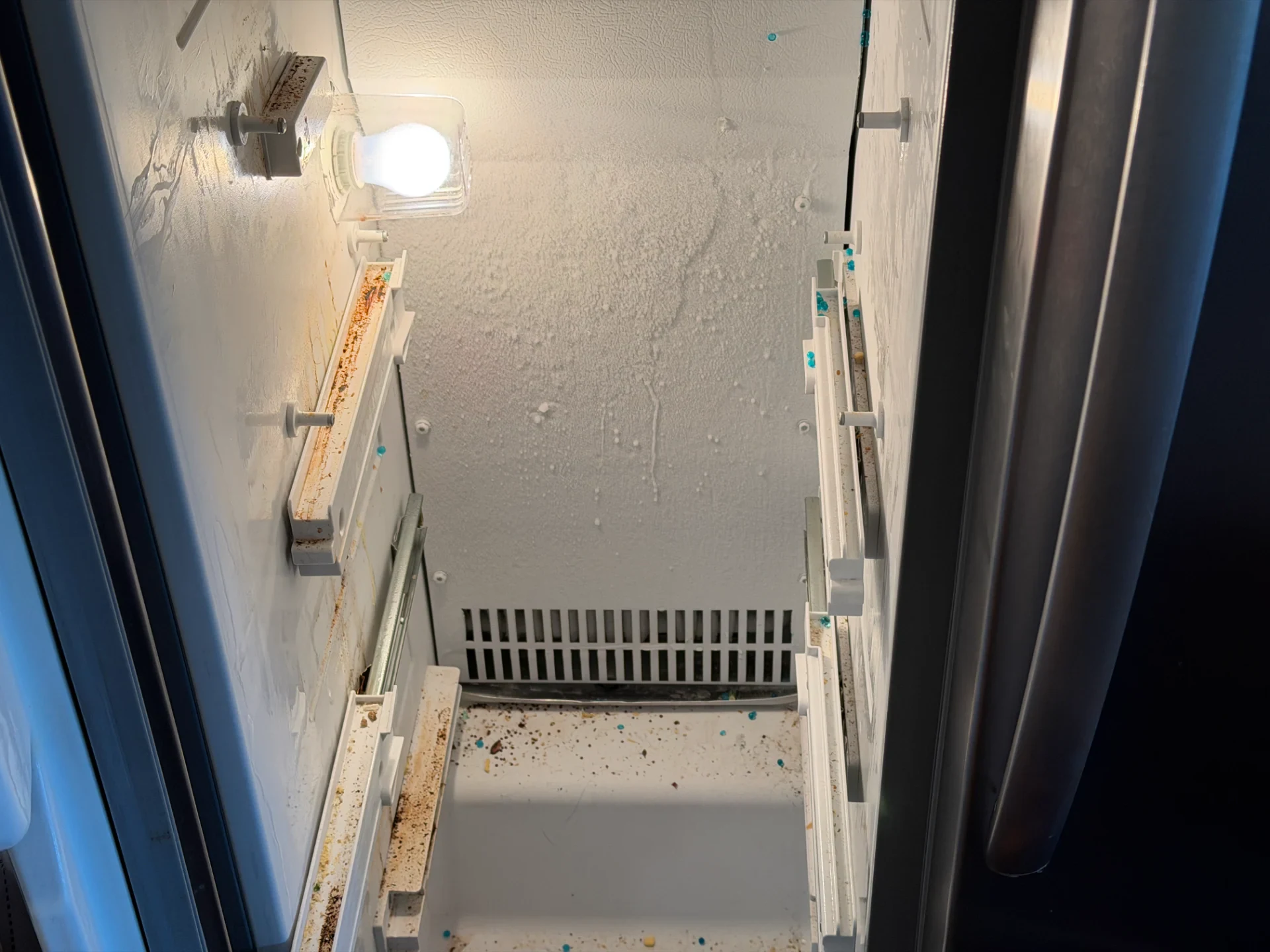
I opened the fresh food door and held my digital anemometer and infrared thermometer up to the upper-left air tower vent where sub-zero air is supposed to blow in from the freezer. Zero airflow. Dead still.
- Checking the Motorized Air Baffle (Damper): The motorized air damper door inside the upper diffuser assembly was wedged completely shut. Because that damper flap stayed closed, freezing air from the evaporator coils remained trapped inside the freezer cabinet, starving the fresh food compartment of airflow and letting the temperature drift up to 56°F.
- Testing Why the Damper Stayed Shut: On a KitchenAid built-in refrigerator, the air damper uses a low-voltage stepper motor driven directly by the main electronic control board. Every time the control board tried to send 12V DC power to open the damper motor and kick on the evaporator fan, the entire board browned out and reset itself a split second later.
Inspecting the Main Electronic Control Board
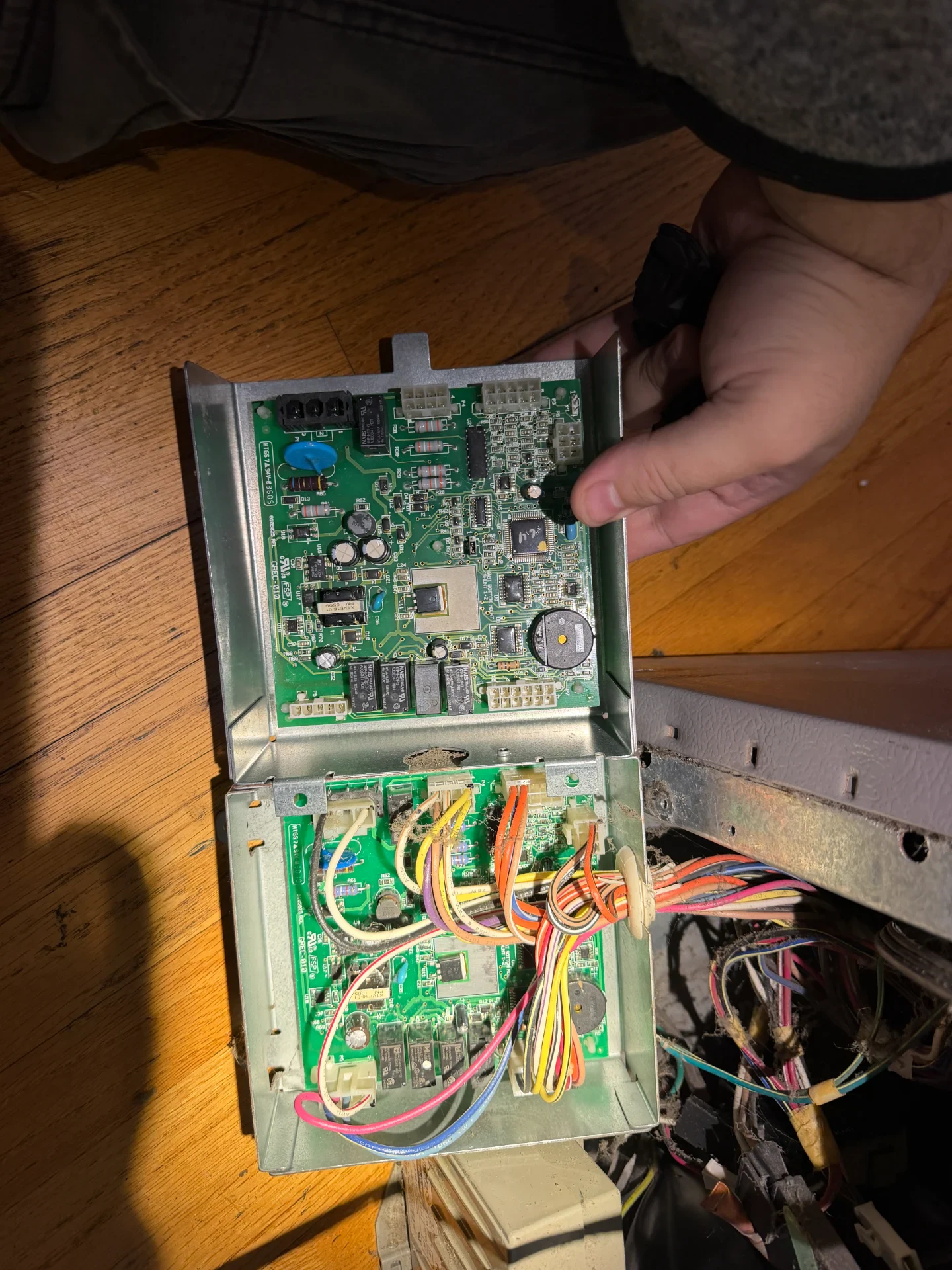
I shut off the main power switch behind the top grille, unbolted the upper metal access cover, and pulled out the main electronic circuit board. This KitchenAid refrigerator had been running nonstop for nearly 18 years. Right away, I spotted the classic failure mode that hits KitchenAid and Whirlpool built-in units after 15 to 20 years of service: three cylindrical electrolytic capacitors on the low-voltage DC power supply section of the control board had bulged at the top vents and leaked dried brown electrolyte crust onto the circuit tracks.
According to official KitchenAid factory service documentation, "When aged electrolytic smoothing capacitors on the main control board lose capacitance and develop high Equivalent Series Resistance (ESR), the low-voltage DC logic rail collapses under relay load, causing one-second relay chattering and preventing the motorized air damper from opening."
Using my Fluke digital multimeter, I tested the 12V DC output pins on the board before pulling it. Instead of a steady 12.0V DC, the voltage bounced wildly between 3.8V and 9.1V DC every second. With the power supply capacitors shot and the processor rebooting sixty times a minute, the board could never complete the damper-open sequence or sustain a cooling cycle. Component-level rework on a 18-year-old multi-layer board with heat-stressed relays is never reliable, so replacing the main control board assembly was the right call.
Replacing the Failed KitchenAid Main Control Board Assembly
Built-in 42-inch and 48-inch KitchenAid refrigerators cost upwards of $11,000 to replace today, so putting a factory-new control board into a clean, rust-free cabinet makes complete financial sense. Once the homeowner approved the flat-rate estimate, I unpacked a genuine OEM KitchenAid Main Electronic Control Board (Part #W10219463) and started the swap:
- Step 1 - Isolating 120V AC Power: I flipped the dedicated 20-amp kitchen breaker off at the sub-panel and switched the upper service disconnect toggle inside the top mechanical housing to the OFF position.
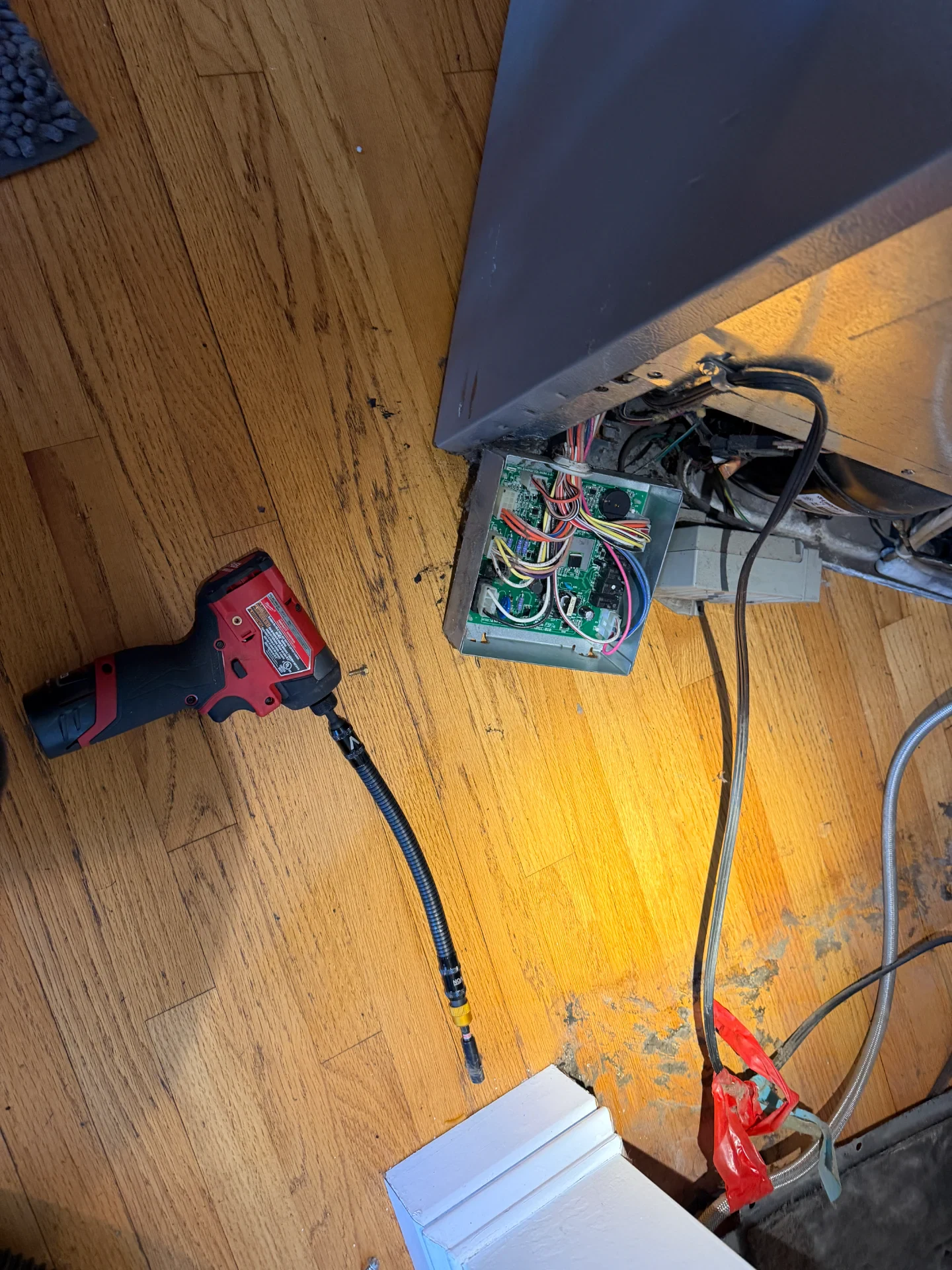
- Step 2 - Releasing the Multi-Pin Ribbon Plugs: I opened the galvanized metal control box above the condenser section and carefully unclipped the color-coded molex plugs and low-voltage ribbon cables feeding the motorized air damper, thermistors, evaporator fan, and compressor inverter.
- Step 3 - Extracting the Old 18-Year-Old Board: Using a 1/4-inch nut driver and needle-nose pliers, I popped the plastic standoffs loose and lifted the degraded circuit board out of the housing.
- Step 4 - Installing the New OEM Control Board: I snapped the new OEM KitchenAid #W10219463 board onto the insulated mounting posts, seated every multi-pin connector plug until the locking tabs clicked tight, and bolted the steel protective cover back into place.
| Diagnostic Test Point | Reading Before Repair | Result After OEM Service |
|---|---|---|
| Fresh Food Compartment Temp | 56°F (Warm, unsafe for food storage) | Pulled down to a steady 37°F within 3 hours |
| Motorized Air Damper Door | Stuck closed; zero cold air entering fridge side | Fully open during cooling call; strong 12°F supply airflow |
| Main Board 12V DC Logic Rail | Unstable 3.8V to 9.1V DC (Cycling every 1 second) | Rock-solid 12.1V DC with zero relay chattering |
| Control Board Capacitors (15-20 Yrs) | Bulging tops, leaked electrolyte, high ESR | Brand-new OEM KitchenAid board (#W10219463) installed |
Running the Service Diagnostic Mode and Verifying Airflow
I flipped the breaker and main power switch back on. Silence, then a smooth, steady hum. The frantic one-second clicking was completely gone.
To verify every component from the control board down to the air duct, I entered the KitchenAid built-in factory diagnostic mode through the interior temperature display. On Test Step 3, I commanded the evaporator fan and the motorized air baffle door to actuate. Immediately, I heard the stepper motor whir smoothly inside the upper left air tower, and the damper door swung wide open.
Within thirty seconds, a strong stream of 12°F air was blowing straight out of the freezer return duct into the fresh food compartment. The compressor and condenser fan ran continuously without a single dropout. Within forty-five minutes of closing the doors, the fresh food thermometer had already dropped from 56°F down to 43°F on its way to the 37°F setpoint. The homeowner was thrilled to save their $11,000 built-in KitchenAid refrigerator for a fraction of the replacement cost.
If your KitchenAid refrigerator is warm in the fresh food section, clicking on and off rapidly, or suffering from blocked airflow anywhere in La Mesa or across San Diego County, book our professional refrigerator repair service online or call our local dispatch team directly at (619) 332-2028.
Transparent Invoice Breakdown
- Built-In Refrigeration Diagnostic & Electronic Board Testing: $99.95 (100% waived upon approving repair — $0)
- Genuine OEM KitchenAid Built-In Main Electronic Control Board (Part #W10219463): $890.00
- Certified Refrigeration Labor (Top Compartment Teardown, Multi-Pin Connector Transfer, Damper Actuation Test & Thermal Calibration): $350.00
- Total Repair Investment: $1,240.00
*Repair completed on-site in La Mesa, CA (91941) in approximately 75 minutes. Backed by our standard 90-day parts and labor warranty under CA BHGS License #A51622.
Need Technician Assistance Today?
$99.95 Technician Diagnostic Visit • 100% Waived With Completed Repair.
More Articles & Troubleshooting Guides
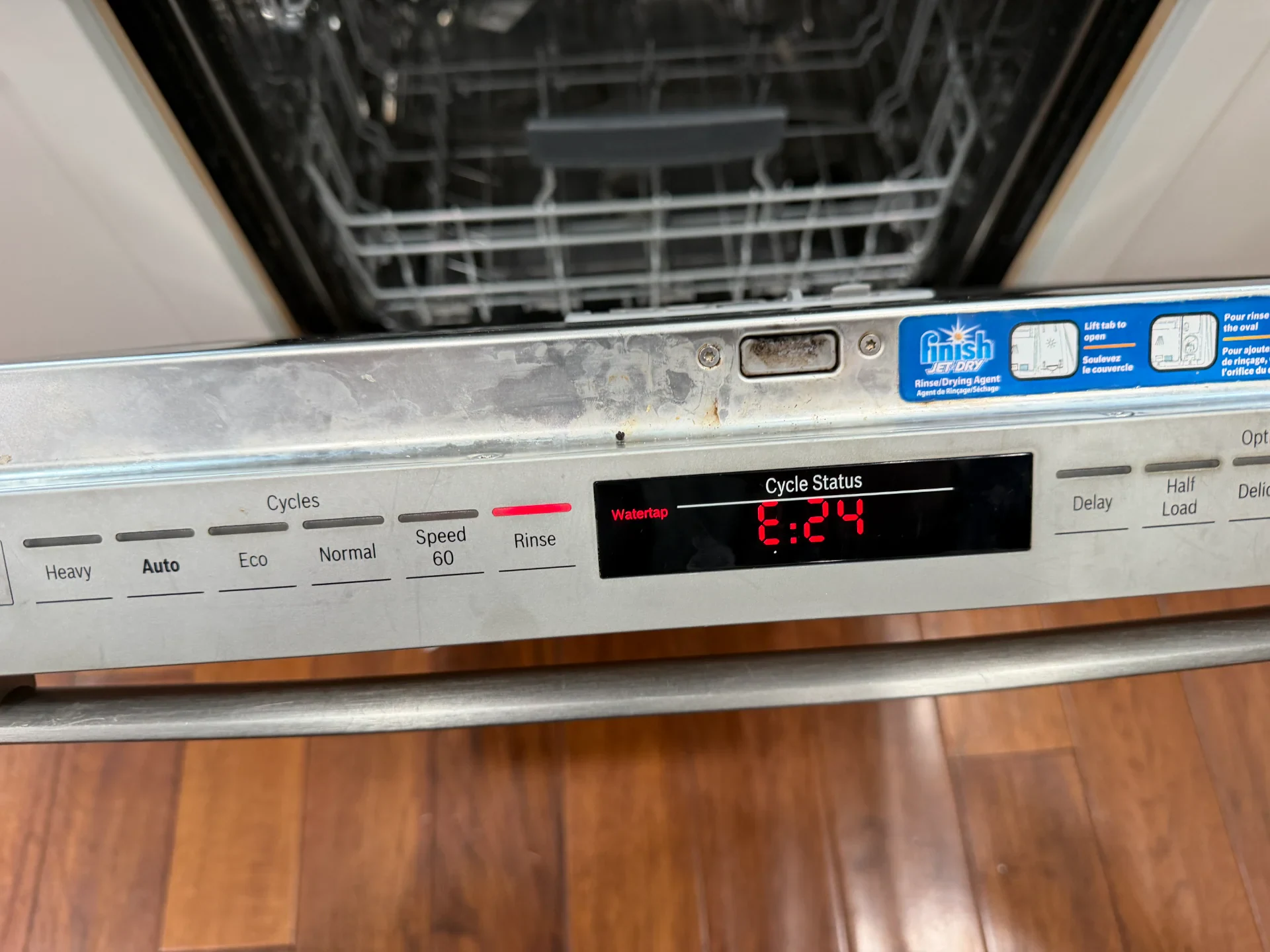
Bosch Dishwasher E24 and E25 Error Code Repair in Indio: Drain Pump, Cover, and Check Valve Replacement
A Bosch 800 Series dishwasher in Indio quit mid-cycle with a full tub of water and error codes E24/E25. We replaced a burned-out 3-phase drain pump, snapped impeller cover, and torn check valve to restore full 28-second drainage
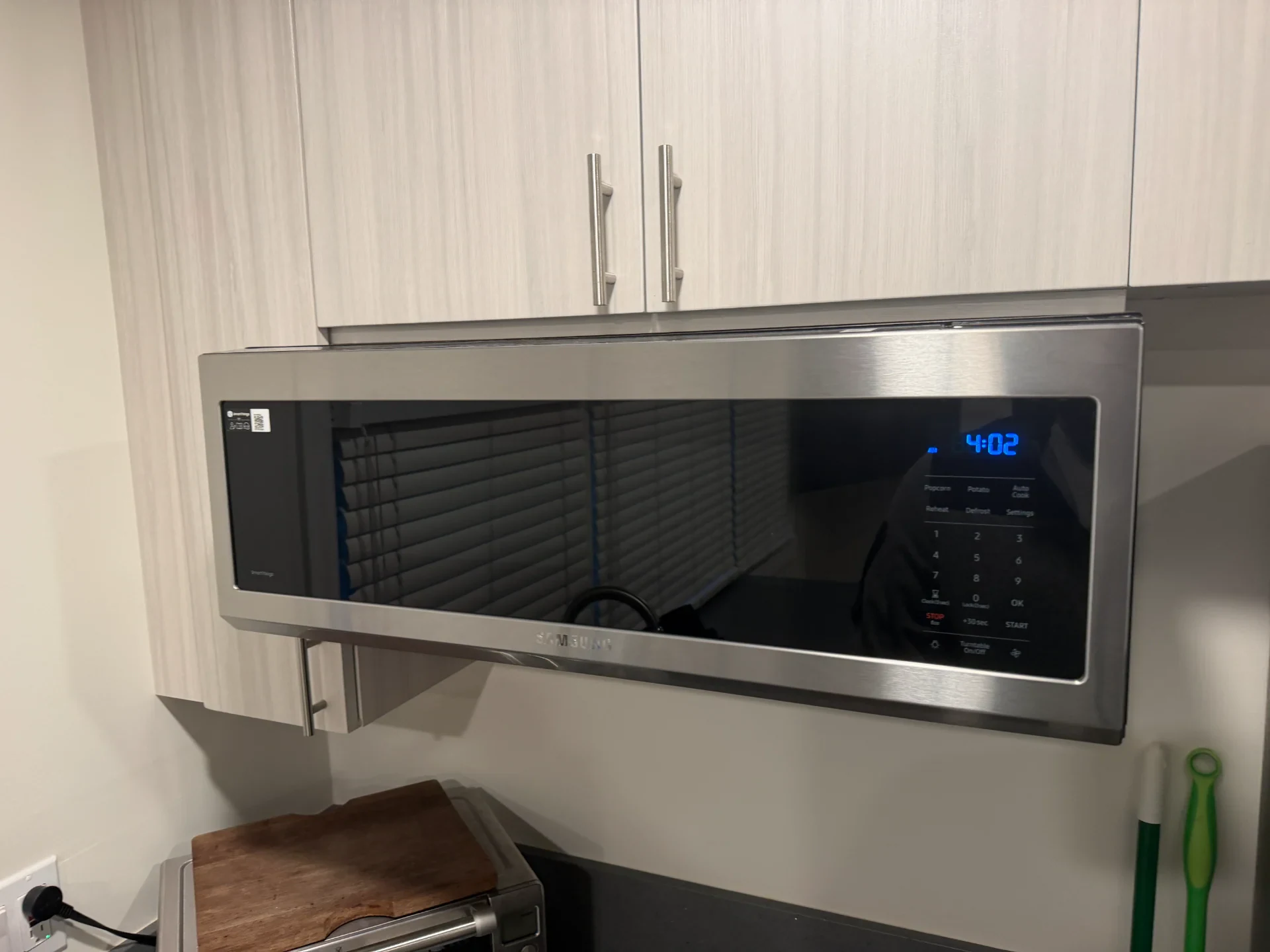
Samsung Microwave Touchpad Not Working in Cathedral City: $475 Door Assembly Diagnosis
A Samsung over-the-range microwave in Cathedral City flashed a -SE- code with a dead touchpad. We verified 5V DC from the main board and traced the fault to a steam-corroded bonded door ribbon ($475 OEM part), saving the owner from an uneconomical $590 repair.
Real Google Reviews From Satisfied Clients
Verified customer ratings from homeowners and businesses across San Diego County & Coachella Valley.
Google Rating (28 Verified Reviews)
W K
“Henry has been great....couldn't have been more knowledgeable and did a great job.....hope if I need help again he is available”
Brent Lagace
“Great service! Excellent staff! Thank you!”
Chris Rea
“Henry arrived and quickly got the dryer opened up and vacuumed, checked all sensors and greased rollers. Very fast, very thorough! Great job!”